Wat Ban Tham
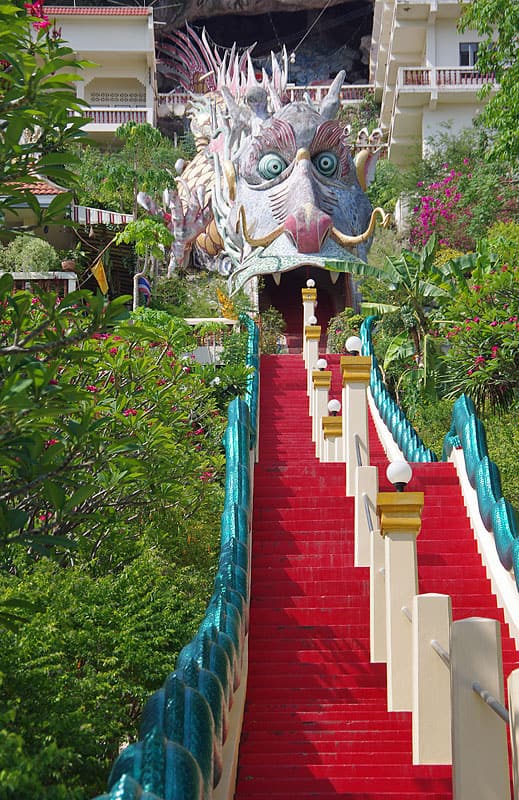
Wat Ban Tham is associated with a hillside cave shrine and a distinctive dragon-shaped stair entrance. The climb is part of the visit.
About Wat Ban Tham and its management
Wat Ban Tham is an active Buddhist temple. The temple community manages the shrine and entrance arrangements; follow its posted rules.
Why this stop matters
The dragon-mouth entrance and ascending stairs lead toward the cave sanctuary, combining playful exterior symbolism with a traditional hillside religious setting.
What to photograph and notice
Photograph the dragon-shaped stairway from below, then document the hill views from safe landings. Avoid flash and disruption inside worship areas.
How to plan your visit
Expect steps, heat and uneven surfaces. Wear suitable footwear, carry water and respect worshippers inside the shrine.
Combine it with the River Kwai Bridge
Check the exact location on the dedicated map below. Compare travel time from the bridge and leave enough time for your return; outlying attractions may need a separate trip.
History and character of this place
Wat Ban Tham is recognized for its dragon-shaped staircase entrance leading towards cave shrines on the hillside. The ascent forms part of the pilgrimage experience, but narrow steps and heat make a slow, respectful visit more suitable than rushing.
Basic information
- Place name
- Wat Ban Tham
- Attraction type
- Active Buddhist temple
- Location
- Tha Muang District, Kanchanaburi Province
- Suggested visit duration
- Allow 1–2 hours on site, adjusting for heat, mobility and crowds.
- Management
- Wat Ban Tham is an active Buddhist temple. The temple community manages the shrine and entrance arrangements; follow its posted rules.
Opening hours
Visit during the temple’s permitted hours and avoid interrupting ceremonies; check with the temple on arrival.
Ticket prices
Check on site whether any specific facility has a charge or suggested donation.
Getting there
Travel by road, then climb the stair route through the dragon entrance at a comfortable pace.
Recommended route
- 1
Arrive at the correct entrance
Travel by road, then climb the stair route through the dragon entrance at a comfortable pace.
- 2
Explore the main features
The dragon-mouth entrance and ascending stairs lead toward the cave sanctuary, combining playful exterior symbolism with a traditional hillside religious setting.
- 3
Observe and photograph thoughtfully
Photograph the dragon-shaped stairway from below, then document the hill views from safe landings. Avoid flash and disruption inside worship areas.
Visitor guidelines
Check the day’s weather and posted notices, bring drinking water and wear stable footwear. Follow site staff directions, avoid restricted zones and respect worship, remembrance or wildlife spaces as applicable.
Photography locations
Photograph the dragon-shaped stairway from below, then document the hill views from safe landings. Avoid flash and disruption inside worship areas.
Where to stay
For a trip focused on the bridge, museums and cemetery, staying in central Kanchanaburi makes transfers easier. For farther attractions in Sai Yok or Si Sawat, compare travel time carefully with riverside lodges and confirm return transport before booking.
Visitor reviews
Read the latest visitor reports, photos and current access information on the specific Google Maps place listing. Ratings change over time and are not reproduced as a fixed score here.
Latest rating and reviews →Open this place in Google Maps
Tha Muang District, Kanchanaburi Province · Wat Ban Tham
Open this place in Google MapsFrequently asked questions
What should I know before visiting Wat Ban Tham?
Expect steps, heat and uneven surfaces. Wear suitable footwear, carry water and respect worshippers inside the shrine.
Can I visit this together with the River Kwai Bridge?
Check the exact location on the dedicated map below. Compare travel time from the bridge and leave enough time for your return; outlying attractions may need a separate trip.